
AI-Enabled Solutions for Life Sciences
Apply domain-aware AI in pharma manufacturing and GMP facilities to reduce manual review effort, accelerate Operational Readiness and strengthen quality workflows, with human experts kept in the loop and governance aligned to regulated life sciences expectations.
Bring Practical AI into GMP Operations
AI-Enabled Solutions help pharmaceutical and biotech organizations use artificial intelligence where it delivers real, measurable value: high-effort documentation, validation, quality and investigation workflows. Instead of generic chatbots, these are purpose-built AI applications designed for regulated life sciences manufacturing and GMP facilities, capable of handling complex standards, large document sets and nuanced quality questions.
Typical use cases include regulatory standards comparison, validation content generation, deviation and investigation support and intelligent review of GxP documentation. Each solution is designed with a human-in-the-loop model, so quality, validation and operations experts review and act on AI recommendations rather than being replaced by them. This maintains quality confidence while significantly reducing manual effort and cycle times.
The CAI approach combines deep life sciences domain knowledge with phData advanced AI and data engineering capabilities, supported by a lifecycle perspective that spans Operational Readiness and Operational Excellence. AI-Enabled Solutions are designed to integrate with existing MES, LIMS, CMMS and document management systems, using risk-based thinking and data governance aligned to FDA AI credibility and Computer Software Assurance guidance. The result is AI that fits into real manufacturing, validation and quality workflows rather than sitting on the side as a pilot.

Challenges in AI for Pharma Operations

Overwhelming documentation workloads
In many facilities, quality and validation teams must compare thousands of GxP documents, SOPs and standards across hundreds of pages, creating bottlenecks during startup, change control and ongoing operations. Manual review is slow, error-prone and diverts experts from higher-value work.

AI pilots that never scale
Pharma and biotech organizations often pilot AI tools successfully but then struggle to move them into validated, production-grade workflows. Missing data architecture, unclear governance and lack of GMP-specific design mean prototypes remain in labs instead of helping teams every day.

Tools that lack GMP context
Off-the-shelf AI platforms can summarize text, but they are not built for life sciences regulatory nuance, technical language or risk-based quality decisions. Without domain context, these tools can miss critical details or provide answers that are hard to trust in GMP environments.
Fragmented data across systems
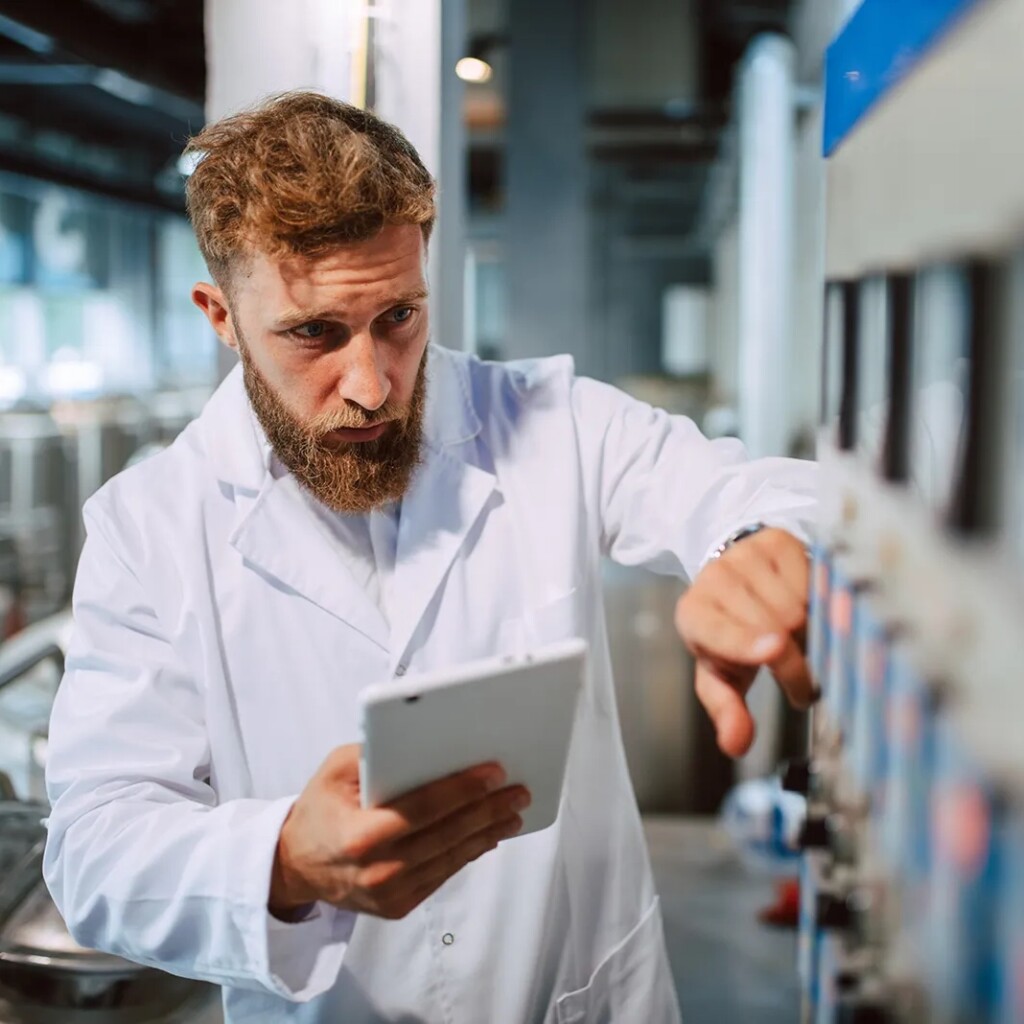
Investigation, trending and decision-making require information from MES, LIMS, CMMS, batch records and quality systems. When data is scattered and not contextualized, teams spend more time hunting for information than analyzing it for product quality and operations.

Unclear regulatory expectations for AI
Regulatory bodies are publishing AI credibility frameworks and lifecycle expectations, but many teams are unsure how to apply these guidelines to validation, documentation or quality analytics. This uncertainty slows adoption even when the business need is clear.
Use Cases in Manufacturing and Quality
Speeding regulatory standards comparison
A global site needs to compare thousands of local SOPs against new global quality standards. AI-Enabled Solutions ingest, categorize and compare large document sets, automatically flagging gaps and conflicts for expert review. This compresses weeks of manual work into hours and supports faster change implementation without sacrificing quality.
Accelerating validation documentation
During facility startup or system upgrades, validation teams must generate large volumes of protocols and reports. AI-Enabled Solutions draw on existing content, specifications and historical documents to create draft validation deliverables that follow site standards, freeing engineers to focus on execution and technical decisions rather than repetitive writing.
Supporting investigations and deviation trending
When deviations occur, data often lives across MES, LIMS and other systems. AI-Enabled Solutions bring these sources together, surface relevant patterns and provide targeted context for investigators. This helps teams move more quickly from symptom to root cause, supporting stronger CAPA and Operational Excellence goals.
Comparing automation code for migrations
As facilities replace legacy automation platforms, they must demonstrate functional equivalence between code bases. AI-Enabled Solutions can analyze control logic, highlight differences and route them for engineering review, reducing the manual burden of code comparison and supporting risk-based validation of new systems.
Extracting equipment data from unstructured sources
Engineering information often lives in Piping and Instrumentation Designs (P&IDs), turnover packages and vendor manuals. AI-Enabled Solutions read these documents, extract structured equipment and component data and support CMMS population and maintenance planning, which contributes directly to Facility & Equipment Readiness and ongoing asset performance.
Connecting AI to Pharma 4.0™ roadmaps
Many organizations want AI to be part of broader Pharma 4.0™ and digital transformation strategies, but are unsure where to begin. AI-Enabled Solutions provide practical entry points tied to validation, quality and readiness use cases, building credibility and capability that can expand across the lifecycle.
How AI-Enabled Solutions Work in Practice

From use case to production workflow
- Work typically begins with a focused assessment of one or two high-effort workflows, such as standards comparison or validation documentation, to confirm technical feasibility and business value
- CAI and phData design the data architecture and pipelines required to support that workflow, including document ingestion, metadata, governance and integration points with existing systems
- AI models and logic are tailored to GMP language, regulatory context and site standards, with clear rules about when and how human experts review and approve outputs.
- Each solution is deployed in a controlled environment with logging, access control and audit trails so that it can be validated under a risk-based Computer Software Assurance approach
- As the workflow stabilizes and value is demonstrated, the same pattern can be extended across sites, product lines or adjacent processes through the AI Flywheel methodology

Built for GMP, quality and lifecycle needs
- Solutions are designed to support ALCOA data integrity principles and evolving FDA AI credibility and lifecycle maintenance expectations, including monitoring, retraining and change control
- Human-in-the-loop design is central: AI accelerates search, comparison and drafting, but trained professionals make final decisions and manage risk, supporting a culture of quality and regulatory confidence
- AI-Enabled Solutions are platform-agnostic and integrate with MES, LIMS, CMMS and other core systems, respecting existing investments and data models rather than requiring a rip-and-replace approach
- Engagements consider Operational Readiness and Operational Excellence from the start, tying AI work to startup timelines, routine operations and continuous improvement measures
- Typical outcomes include 60–70% reduction in document review effort on targeted workflows and significant reductions in manual work for investigations and validation deliverables
Services to Support AI Adoption
AI Readiness and Use Case Assessment
Structured evaluation of your digital and data landscape, identification of high-value AI opportunities in validation, quality and readiness, and a prioritized roadmap aligned with GMP expectations and Operational Readiness goals.
AI Strategy and Governance Workshops
Collaborative sessions with quality, validation, operations and IT stakeholders to define AI vision, governance, human-in-the-loop roles and risk-based controls that support safe, sustainable AI use in GMP environments.
AI Solution Design and Prototyping
Design and development of targeted AI workflows — such as document comparison, validation content generation or investigation support — using data models and architectures tailored to life sciences manufacturing and quality systems.
AI Platform and Data Architecture Engineering
Building or extending the data platform, pipelines and integration points required for scalable AI in GMP settings, including document ingestion, metadata, security and interfaces with MES, LIMS, CMMS and DMS.
Validation and Computer Software Assurance for AI
Applying risk-based Computer Software Assurance approaches to AI solutions, including test strategy, documentation, audit trails and lifecycle controls that align with FDA and global regulatory expectations.
Deployment, Training and Change Management
Rolling out AI-Enabled Solutions into daily operations, training end users and leaders, and embedding new ways of working so that teams adopt AI confidently and consistently across sites and functions.
Lifecycle Monitoring and Continuous Improvement
Ongoing monitoring of AI performance, periodic reviews, retraining plans and continuous improvement activities that keep AI solutions current with process changes, regulatory developments and data evolution.
Explore AI opportunities in your validation and quality workflows
In a focused session with CAI digital and quality SMEs, review your current documentation and investigation workload, identify high-impact AI use cases and outline practical next steps that fit your GMP environment.
Start with an AI-Enabled workflow pilot
Pilot a single AI-Enabled workflow, such as standards comparison or validation content generation, to demonstrate value quickly, gather feedback from users and build a foundation for broader adoption across Operational Readiness and Operational Excellence initiatives.
Resources
- Blog

- Blog

- E-Publication
- E-Publication
- Blog
Powered by Strategic Partnerships
phData – AI and Data Engineering
phData brings deep expertise in modern data platforms, AI/ML engineering and model lifecycle management. Combined with CAI domain expertise, this partnership enables scalable, production-grade AI solutions built on robust data foundations for regulated life sciences environments.
Cloud and Data
Platform Providers
AI-Enabled Solutions can run on leading cloud and data platforms, using established security, monitoring and governance capabilities. CAI works within each client’s chosen ecosystem to support data integrity, performance and integration needs.
Frequently Asked Questions
What are AI-Enabled Solutions in the context of life sciences?
AI-Enabled Solutions are custom AI applications and workflows designed for high-effort tasks in pharmaceutical and biotech manufacturing, quality and compliance. Examples include document comparison, validation content generation, investigation support and intelligent document review. They are built for GMP environments, integrate with existing systems and follow a human-in-the-loop model so experts remain central to decision-making.
How do AI-Enabled Solutions support Operational Readiness and Operational Excellence?
For Operational Readiness, AI-Enabled Solutions reduce manual effort in validation and documentation, compressing timelines for startup, technology transfer and expansion. For Operational Excellence, they help teams analyze data faster, support stronger investigations and standardize quality workflows across sites. This combination supports faster, more confident startup and stronger ongoing performance without adding unnecessary complexity.
How are these solutions validated for GMP use?
AI-Enabled Solutions are implemented under a risk-based Computer Software Assurance approach. This includes defining intended use, establishing requirements, validating critical functions, implementing audit trails and access controls and documenting testing and lifecycle controls. The validation strategy aligns to FDA AI credibility and CSA guidance and is adapted to each client’s quality system.
Do these solutions replace validation engineers or quality professionals?
No. The goal is to reduce repetitive manual work, not replace expert judgment. AI automates search, comparison and drafting tasks, but quality and validation professionals review outputs, make decisions and manage risk. This human-in-the-loop design is essential for regulatory confidence and for maintaining a strong quality culture.
What systems and data sources can AI-Enabled Solutions connect to?
Solutions can ingest and analyze documents from document management systems, extract data from P&IDs and turnover packages and connect to data from MES, LIMS, CMMS and other core platforms. Integration design respects existing architectures and data governance, focusing on creating context-rich inputs that AI can use effectively.
How do you decide where to start with AI?
A typical starting point is a targeted assessment that focuses on a few high-effort workflows and evaluates data availability, business impact and regulatory considerations. From there, CAI and the client select one or two use cases, such as standards comparison or validation documentation, that offer clear, measurable value and can be implemented safely within existing governance.
What if our organization has already piloted AI tools?
Existing pilots can be a strong foundation. CAI can help assess what worked, identify gaps in data, governance or validation to determine whether those pilots can be hardened into production workflows. If not, the lessons learned still inform the design of new AI-Enabled Solutions that better fit operational and regulatory needs.
How long does it take to see value from an AI-Enabled workflow?
Timelines depend on scope, data complexity and governance maturity. In documented examples, a document comparison solution was able to process thousands of documents in under 20 hours of machine time once deployed, reducing manual review effort by 60–70%. Many organizations can see tangible value within a few months of starting a focused pilot.
Pharma 4.0™ is a trademark of the International Society for Pharmaceutical Engineering (ISPE)
Ready to put AI to work?
AI-Enabled Solutions help life sciences organizations use AI where it matters most: reducing manual effort, supporting better decisions and strengthening Operational Readiness and Operational Excellence. Connect with CAI to explore practical, GMP-ready ways to bring AI into your validation and quality workflows.